

The trends in Washington DC wedding catering for 2026 are interactive food stations replacing traditional buffets, hyper-local sourcing from Virginia and Maryland farms, elevated comfort food, and a fully intentional mocktail program. Formal plated dinners remain available but are no longer the dominant format — most DC couples are choosing a hybrid: cocktail-hour stations followed by family-style dinner.
What DC couples are choosing in 2026 — at a glance:
- Interactive food stations (live pasta, taco al pastor, oyster bars) have become the default for cocktail hour
- Elevated comfort food — familiar dishes executed with premium local ingredients — is the most emotionally resonant trend
- Hyper-local sourcing from Chesapeake Bay, Virginia wine country, and Montgomery County farms is now a standard request, not a premium add-on
- Plant-forward main courses are appearing on non-vegan wedding menus as genuine centerpiece dishes
- Mocktail programs are receiving the same design attention as cocktail lists, driven largely by Gen Z couples
- Late-night snack stations (fry bars, mini sliders, grilled cheese) have moved from novelty to expectation
- Food as visual design — grazing installations built as architecture — extends wedding content reach on social media
- Personalized menus telling the couple’s specific story are the thread connecting every other trend
Main Event Caterers has worked with couples across Washington DC, Northern Virginia, and Maryland for 25 years. The trends below come from our 2026 consultation meetings, tasting sessions, and menu planning conversations — not from industry surveys, but from what DC couples are actually booking right now.
Wedding Catering Trend # 1 — Interactive Food Stations Have Replaced the Buffet Line
The wedding buffet has been the most practical and economical wedding dinner choice for nearly two decades. In 2026, wedding diners are looking for experiences, not just food.
Interactive food stations inspire this lingering movement. Just picture a live pasta station where a chef makes fresh fettuccine to order, a taco al pastor station with a rotating spit, hand pressed tortillas, and an oyster bar where the shucker is a gather point for the whole room. They’re not food delivery systems, they’re events within the event.
What this looks like at Main Event Caterers. Our most requested 2026 wedding is a cocktail hour with a grazing installation and two interactive stations, followed by family-style dinner. The stations create energy during the first hour and the family-style service creates warmth during the meal. It’s a combination that works for almost every DC and Northern Virginia venue.
Zola’s 2026 First Look Report cites that approximately fifty percent of couples are considering interactive food stations for their receptions, and that figure has doubled within the last four years.
Trend 2 — Elevated Comfort Food
Elements of this trend can easily be interpreted incorrectly. Elevated comfort food isn’t about serving something like chicken tenders at a black tie event as a joke. Elevated comfort food is about providing experiences for guests that serve them food that they truly love, something that makes them feel something, and executing that food at the highest level they can, something they will never forget.
This includes a mac and cheese bar centered around aged Virginia cheddar and gruyère, finished with truffle & crispy shallots at the table. Short rib tacos, made with hand-pressed tortillas and a house made salsa verde made of tomatillos from the Shenandoah Valley. Chicken and waffles’ with a bourbon maple syrup made from a local distillery of Northern Virginia.
This journey of flavors is centered around food + storytelling. Guests themself feel at home when they see traditional chicken tacos, and some food customs feel stick to the couple the food is about. The bridge of this couple + guest interaction is how strong cross-branding is CULTURE + TASTE. A familiar food that is made with care and premium ingredients.
Trend 3 — Hyper-Local and Seasonal Sourcing
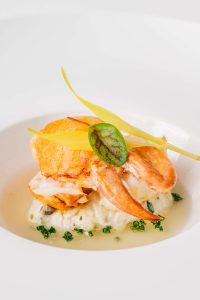
The DMV’s agricultural landscape is extraordinary, and in 2026 couples are finally asking us to make it visible. Virginia wine country, the Chesapeake Bay, the farms of Montgomery County and Loudoun County, and the craft distilleries of Northern Virginia are all places that have excellent ingredients and food. We can finally tell the story from the ingredients to the menu and it will not only be a nice story but an excellent source of food as well.
The Chesapeake blue crab is one of the most unique additions to a DC wedding menu because of the state’s limited season for this ingredient (which spans from spring to late fall). The Virginia Petit Verdot and Cabernet Franc from the nearby Charlottesville and Leesburg vineyards offer serious competition to the French and Californian selections. DC area apiaries provide local honey. Ramps from the Blue Ridge foothills in April and the Eastern Shore oysters in the colder months help to ensure that customers know where the product is coming from.
Main Event Caterers has spent 25 years building relationships with the local purveyors in Virginia and Maryland. These relationships help us to source unique ingredients that aren’t readily available and provide the story behind the food to the customers.
Trend 4 — Plant-Forward Menus at Non-Vegan Weddings
This trend is sometimes mischaracterized as a concession to dietary restrictions. It is not. The plant-forward menus our couples are requesting in 2026 are not about removing meat — they are about promoting vegetables to the center of the plate and building dishes around them that are as compelling as any protein-focused entrée.
A whole roasted cauliflower with harissa and pomegranate seeds, plated on a smear of labneh and finished with fresh herbs, is a main course. A wild mushroom Wellington with a reduction made from Virginia red wine is a main course. A spring grain bowl built around farro, roasted asparagus, pickled ramps, and a soft-poached egg is a main course. These dishes do not ask guests to compromise. They ask guests to reconsider what they thought the center of a plate had to be.
The practical benefit at mixed-dietary weddings is real: when the plant-forward dishes are genuinely excellent, the dietary accommodation conversation disappears. Nobody feels like they received the lesser version. For more specific inspiration, see our dedicated guide to vegan and plant-based wedding menu ideas for DC couples.
Trend 5 — The Mocktail Revolution
In 2026, the couples booking with us are no longer treating the non-alcoholic bar as an afterthought. They are building mocktail menus with the same level of intention they bring to the cocktail list — and in many cases, the zero-proof options are generating more conversation among guests than the spirits.
The reasons are multiple. Generation Z, now firmly in the prime wedding demographic, has normalized choosing not to drink at celebratory occasions — and the sober-curious movement has extended that norm to guests of all ages. The sober-curious movement has normalized choosing not to drink at celebratory occasions. And there is a genuine hospitality argument: a guest who does not drink should have the same quality of experience at your bar as a guest who does. A sparkling water with a slice of lemon does not achieve that. A rosemary cucumber spritz with house-made syrup, fresh lime, and tonic, garnished with an herb sprig and served in the same glassware as a gin and tonic — that achieves it.
Main Event’s bar program now includes a full mocktail menu as standard for every wedding we cater. Our approach is to build the non-alcoholic menu alongside the cocktail program from the beginning, not as a supplement. Signature mocktails named for the couple, seasonal botanical blends, and functional sips that reference the DC Cherry Blossom or the Chesapeake Bay are among our most requested additions to the 2026 bar program.
Trend 6 — Late-Night Snack Stations
The late-night snack station has moved from novelty to expectation. Couples who book with us today almost always ask about it — not as a budget item to consider, but as a fixed element of the evening they want to get right.
The timing and the format are both important. The station typically appears between 9:30 and 11pm, timed to coincide with the second or third hour of dancing. Guests have been on the floor, they are hungry in a different way than they were at dinner, and the right food in this moment creates a second energy peak that carries the room to midnight and beyond.
What works: small, handheld, and slightly indulgent. A french fry bar with truffle aioli and a Parmesan option. Mini grilled cheese sandwiches with a tomato soup shot on the side. Gourmet hot dogs with house-made toppings and a local craft mustard. Mini wagyu sliders on brioche. The best late-night stations are the ones that feel like a surprise — guests turn a corner at 10pm and discover something that makes them laugh with delight.
Trend 7 — Food as Visual Design
The grazing table has been a fixture at DC weddings for several years, but in 2026 it has evolved into something more ambitious. We are no longer talking about a wooden board with some cheese and crackers. We are talking about a four-foot installation that incorporates seasonal flowers from the same florist doing the centerpieces, local honey in glass vessels that match the tablescape, edible flowers sourced from a Virginia farm, and a height variation strategy that makes the whole thing read as architecture.
Main Event’s event design team approaches food presentation as part of the overall visual narrative of the wedding. The stations are designed to photograph beautifully because they are beautiful — and because in 2026, a significant portion of your guests will photograph what they eat before they eat it. A stunning food display is not a vanity investment. It is content that your guests create and share on your behalf, extending the reach of your wedding day far beyond the room.
Trend 8 — Menus That Tell Your Specific Story
This is the trend that underlies all the others. The common thread running through every request we receive in 2026 — the interactive stations, the local ingredients, the mocktail programs, the late-night surprises — is personalization. Couples want their wedding food to say something true about who they are.
We have built menus this year that incorporate a grandmother’s dumpling recipe alongside a Chesapeake crab station, because one partner’s family is Korean and the other grew up in Maryland. We have designed cocktail hours around the specific Virginia winery where a couple got engaged, using grapes from that vineyard’s harvest. We have created late-night stations that reference the neighborhood restaurant where the couple had their first date.
None of this requires an unlimited budget. It requires a catering team that listens carefully in the first consultation and then builds a menu that has an actual narrative. That is the work we do at Main Event — not just designing food that is good, but designing food that is specifically yours.
What These Wedding Trends Mean for Your DC Wedding Budget
It is worth being direct about the cost implications of this year’s most popular approaches. Interactive stations, because they require dedicated staffing at each station, typically add cost compared to an equivalent buffet. A single interactive station with a chef typically adds $8 to $15 per person* compared to a buffet option. Local and seasonal ingredients — particularly premium Chesapeake seafood and Virginia specialty products — carry a higher per-unit cost than standard distribution alternatives. A well-designed mocktail program adds roughly $10 to $20 per person* to the bar budget.
That said, there are real opportunities to allocate your catering investment strategically:
- Family-style dinner service is both genuinely on-trend and typically less expensive than full plated service, because it requires fewer servers per table.
- Off-peak dates — January through March, and most Novembers — offer better availability and sometimes lower vendor rates without any compromise in food quality.
- A seasonal menu built around what is actually growing in Virginia and Maryland at your wedding date will consistently outperform an out-of-season menu at any price point.
Every trend in this article can be designed into your wedding menu
Our event designers work with DC couples from the very first conversation to build menus that are genuinely theirs — specific to their story, their venue, and the guests who matter most to them. We are currently booking for 2026 and 2027. Order your wedding catering right now.
Frequently Asked Questions
What are the most popular wedding catering styles in Washington DC for 2026?
The most requested format we are seeing in 2026 is a combination approach: a cocktail hour featuring a grazing installation and one or two interactive stations, followed by a family-style dinner. This hybrid gives couples the visual impact and social energy of a station-based event alongside the warmth and structure of a seated dinner. For smaller weddings under 80 guests, plated service remains common for its elegance and pacing. For larger events of 150 or more, station-based receptions are almost universal.
Are interactive food stations more expensive than a standard buffet?
Generally, yes — though the difference is not as large as many couples expect. Interactive stations require dedicated staffing at each station, which adds to the overall service cost. A single interactive station with a chef typically adds $8 to $15 per person* compared to the equivalent buffet option. However, stations reduce the cost of table service, since guests are not being waited on at their seats. The most cost-effective approach is a strategic combination: one or two high-impact interactive stations during cocktail hour, paired with family-style dinner that does not require per-table server staffing.
How do I incorporate local DC and Virginia flavors into my wedding menu?
The most direct approach is to have an early conversation with your caterer about what is in season at your wedding date and what local producers they work with. At Main Event, we build menus around our relationships with Virginia and Maryland farms, Chesapeake Bay seafood suppliers, and local artisan producers. For a May or June wedding, that means asparagus, early strawberries, spring peas, and the first Chesapeake soft-shell crabs of the season. For October, it means Virginia wine country produce, Chesapeake oysters at their peak, and apple and squash from the Shenandoah Valley. The calendar tells you what to serve.
How early should I book a wedding caterer in DC for a 2026 or 2027 wedding?
For 2026 weddings in peak months — May, June, September, and October — the honest answer is that many dates are already spoken for. If you are planning a peak-season 2026 wedding and have not yet confirmed your caterer, contact us immediately to check availability. For 2027 weddings, we recommend beginning the conversation 12 to 18 months before your target date. The couples who have the most creative freedom in menu design are invariably the ones who engaged their caterer earliest.
Start Planning Your 2026 or 2027 DC Wedding Menu
Every trend we have covered in this article is available to you — not as a package to select from a list, but as a starting point for a menu that is specifically yours. Our event designers have been helping Washington DC couples design wedding food for 25 years. We know the venues, we know the seasons, we know the local producers, and we know what works in the rooms where DC weddings actually happen.
Let’s start planning your wedding menu
Whether your wedding is in six months or eighteen, an early conversation with our event design team gives you the most time, the most options, and the best chance of a menu that genuinely surprises and delights your guests. Just get in touch with us today.
Disclaimer: *The prices listed in this article do not serve as a public offer from the company but only describe general trends in the United States